I’m Issei — a counselor and university lecturer, writing from Japan.
Two jobs that turned out to be one
I’ve spent more than forty years doing two things: teaching and listening. I taught in junior high schools, in a vocational college, and eventually at university, where I worked full-time before moving to part-time lecturing. Alongside that, I trained and worked as a psychological counselor.
Those sound like different careers. They aren’t. Both are mostly listening — and after four decades of it, I can’t switch off the habit of asking why someone does what they do. That question runs under everything on this site.
Why I built this
I grew up in Showa-era Japan.
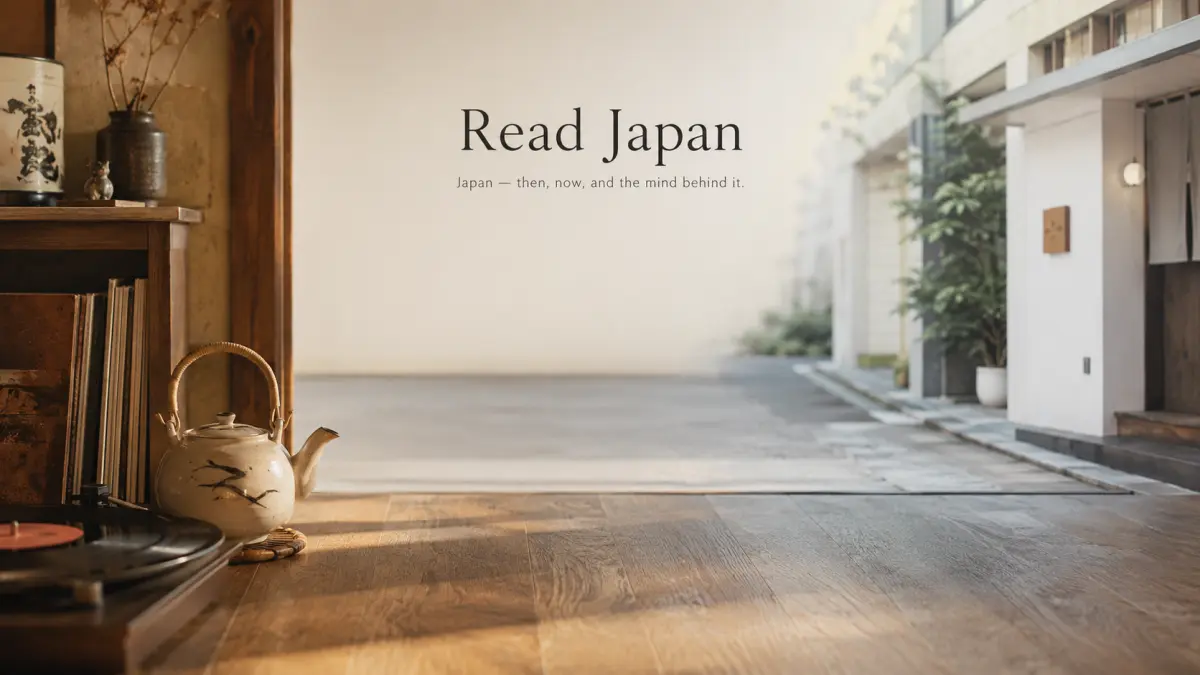
Not the Japan of temples and samurai that people abroad picture when they hear “old Japan,” and not the Japan of neon and anime that gets exported now. Something quieter and much closer: a particular teapot on a particular shelf. A vendor’s call at dusk. A record turning in a room with a wooden floor.
Almost none of it is written down. The people who remember it are getting older, and most of us never thought it was worth recording — it was just Tuesday. But it’s gone now, or nearly, and when I look at what the world reads about Japan, that Japan isn’t in it.
So I decided to write it down myself, in English, while I still remember it clearly.
What you’ll find here
Two ways in, both from the inside.
THEN is a first-hand account of the Showa era — the objects that filled an ordinary home and the sounds that filled an ordinary day. Not research. Memory.
NOW is what’s actually trending in Japan, and why. Trends reach the outside world with their reasons stripped off; a word goes viral, a habit spreads, and the logic behind it gets lost somewhere in translation. I try to put the reason back.
What this isn’t
This is not a guidebook, and I’m not trying to sell you a Japan that fits on a postcard. I won’t tell you where to eat in Kyoto. There are people far better qualified for that.
What I can offer is one Japanese person’s honest account — of a country he grew up in, and of the people he’s spent a lifetime listening to.
Elsewhere
I also write at isseisuzuki.org, where I work on English learning and career development for Japanese adult learners. If you’re studying English, some of what’s here may double as reading practice — that’s half the reason I write it in English.
Get in touch
I read every message myself. If something here made you curious, or if there’s a part of Japan you’d like to know more about, I’d be glad to hear it.