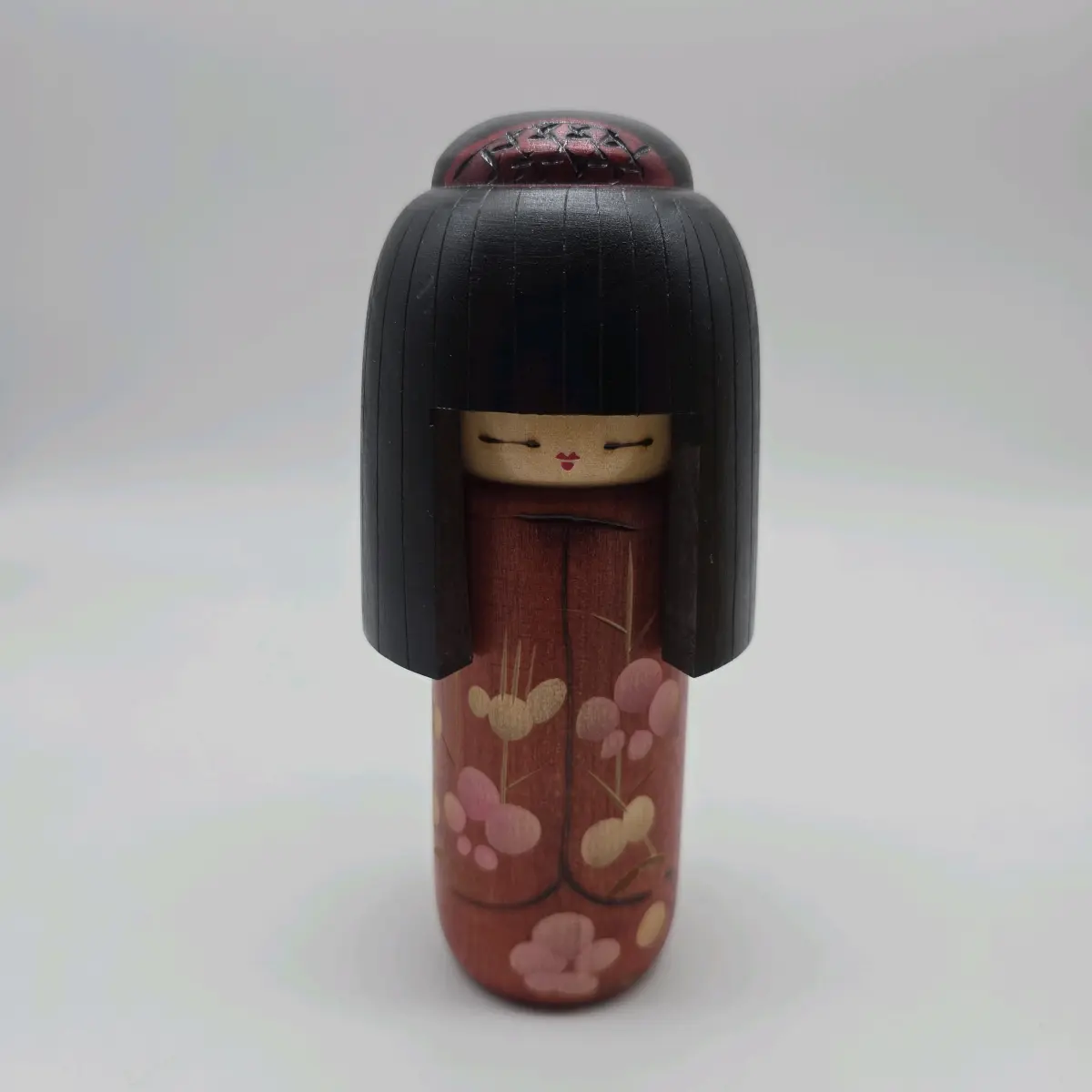
On a shelf in a hot-spring inn, or on top of a cabinet in a grandparent’s house, a small wooden figure sits by itself. No arms, no legs. A round head on a slender body. Nobody quite remembers who put it there, or how long it has been sitting in that spot. And yet the family kept it, passing it down without ever thinking to throw it away. That is what a kokeshi is.
I spent decades working in education and counseling, watching what people let go of and what they choose to keep. The things that survive usually survive for a reason. Kokeshi have stayed close to Japanese life for so long not simply because they are pretty. Inside this one small wooden doll is the whole of how Japanese people have learned to see the things around them. Let me walk you through that, from the viewpoint of someone who actually lives here.
A doll that outlived a century
Kokeshi were born at the end of the Edo period, in the hot-spring towns of northern Japan’s Tohoku region. Craftsmen called kijishi, who turned wooden bowls and trays on a lathe, began using their leftover scraps of wood to make simple toys for children. In time these toys were sold as keepsakes to travelers taking the hot-spring cure, and each town slowly developed its own shapes and painted patterns.
So a kokeshi was never a precious object made to be treasured. It came from spare wood, was placed in a child’s hands, and still, somehow, was never discarded. That gap — humble in origin, yet cared for across generations — is where the Japanese way of seeing begins to show itself.
The maker’s hands: craft as devotion
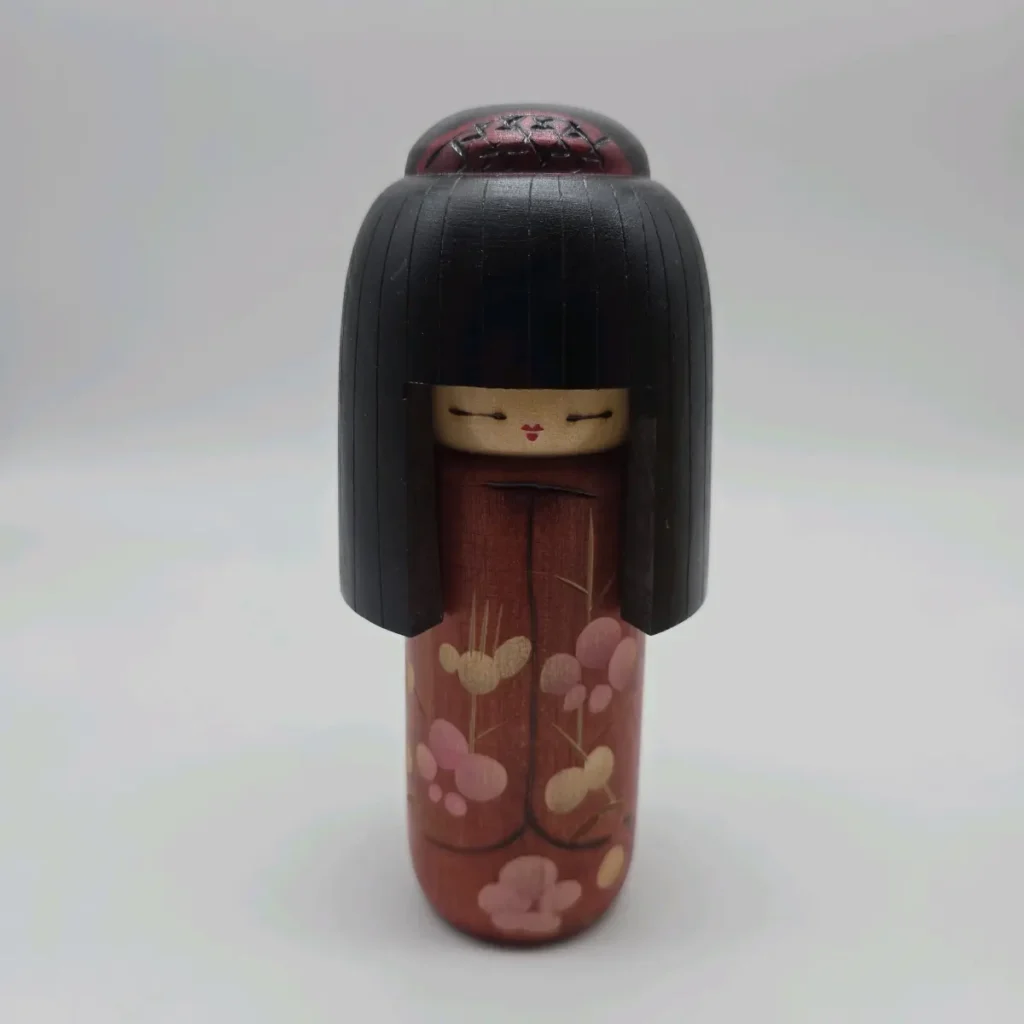
Each kijishi works within the shapes, colors, and brushstrokes handed down in his own region, from master to apprentice, from parent to child. Most kokeshi carry the maker’s signature on the base, a discreet mark of who put their heart into this particular doll.
There is a word in Japanese, monozukuri. It means more than manufacturing. It is closer to pouring your own spirit into the work of your hands. A craftsman may turn the same form hundreds of times, and still no two faces come out quite alike, because he is facing each single doll as he makes it. When people abroad feel drawn to Japanese craftsmanship, I think what they are sensing is exactly this: the care folded into the object.
You can find my shop here. ▶ ShowaFinds (Etsy): https://www.etsy.com/shop/ShowaFinds ▶ Sosaku kokeshi “Haregi” by Shin’ichiro: 👉 [PRODUCT PAGE]
Why an object can hold something
Writers abroad who encounter kokeshi often say the same thing. It does not move. It does not speak. And yet it seems to be saying something to you.
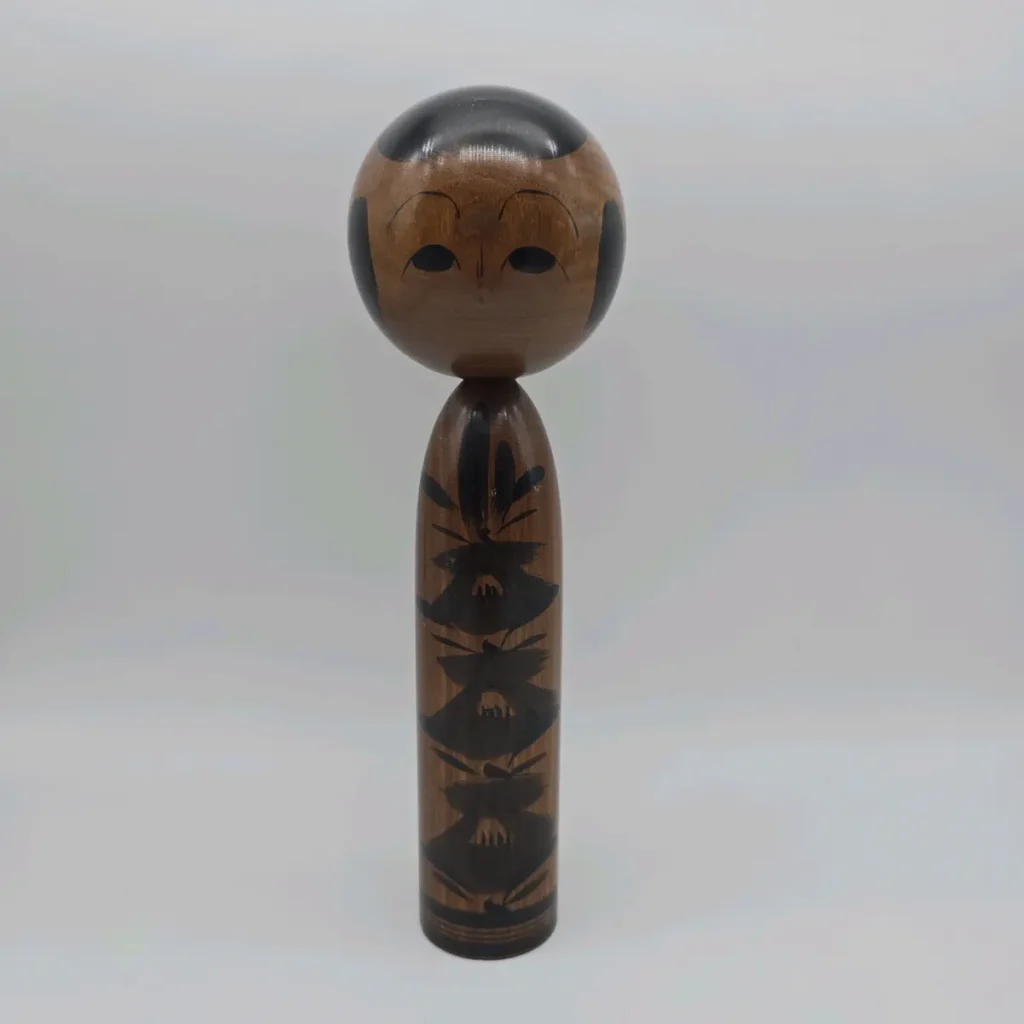
To a Japanese person, this is not so strange. There is an old sense here that something dwells in everything — in mountains, in rivers, in old tools. There is even the idea that a tool used long enough comes to hold a spirit of its own. This is why Japanese people find it hard to casually throw away an old doll: it feels as though someone is still inside. That old belief is part of why kokeshi have survived, handed down from one generation to the next.
Beauty in what’s unfinished
A kokeshi is painted with only a few strokes. A pair of eyes, a small mouth, and little else. No arms, no legs. Yet those few lines are enough to give each doll a face of its own: lids that look nearly closed, and a look that carries the faintest trace of quiet sadness. It is neither as intricate nor as ornate as a Western doll, and it does not need to be.
And yet the Japanese eye has long found that very restraint beautiful. Rather than what is flawless and finished, we lean toward what is slightly lacking, what is passing away. This is the sensibility called wabi-sabi — finding beauty in imperfection and impermanence — and its close cousin mono no aware, a tender awareness that all things fade. Interest in this way of seeing has grown around the world in recent years, and kokeshi have ridden that wave. To find richness in how little a thing shows: that view is now reaching far beyond Japan.
A small prayer you can hold
There is one more thing worth remembering. A kokeshi was, from the beginning, a gift. It was handed over as a wish for a child’s healthy growth, to invite good fortune, to keep misfortune away.
This is not grand religion. It is not quite the same as praying at a shrine, either. It is prayer dissolved gently into everyday life — a very Japanese shape of faith, pressed into a small wooden figure that fits in your palm. You wish someone health or happiness, and you hand them a wooden doll. That plainness sits at the very core of what a kokeshi is.
The old spirit, still alive
Kokeshi are not a relic of the past. After the war, a new form appeared — sosaku, or “creative” kokeshi — made freely, away from the traditional patterns. With the same respect for the craft, but shaped by modern themes and a maker’s personal vision, these pieces now draw collectors from all over the world. Some have even been created in collaboration with international characters. The old spirit, it turns out, is still alive, simply wearing a new form.
I have been drawn to sosaku kokeshi by makers from Tohoku, and I keep a few close at hand. One of them, titled Haregi (a festive kimono) and signed Shin’ichiro, arrived with its original box recording several awards, including one from the head of the Forestry Agency. Within its free, unbound form live a sure hand and a stillness that feels almost like prayer. These one-of-a-kind pieces are exactly what I hope to share, and to place into the hands of readers abroad.
You can find my shop here. ▶ ShowaFinds (Etsy): https://www.etsy.com/shop/ShowaFinds ▶ Sosaku kokeshi “Haregi” by Shin’ichiro: [PRODUCT PAGE URL](Coming soon)
Please note: each of these is a one-of-a-kind piece made by hand. No two are ever the same. If an item has already sold, please forgive us — I hope instead you will meet the one piece that is meant for you.
Where you can still feel it today
If you ever travel to Japan, visit the hot-spring towns of Tohoku. In the birthplaces of kokeshi — Naruko in Miyagi Prefecture, among others — craftsmen are still turning their lathes today. Some Naruko kokeshi make a small squeaking sound when you twist the head, and it is hard not to smile the moment you feel it in your hand. Exchange a few words with a maker in a workshop, and the “care folded into the object” I described earlier stops being an idea and becomes something you can feel in the air of the room.
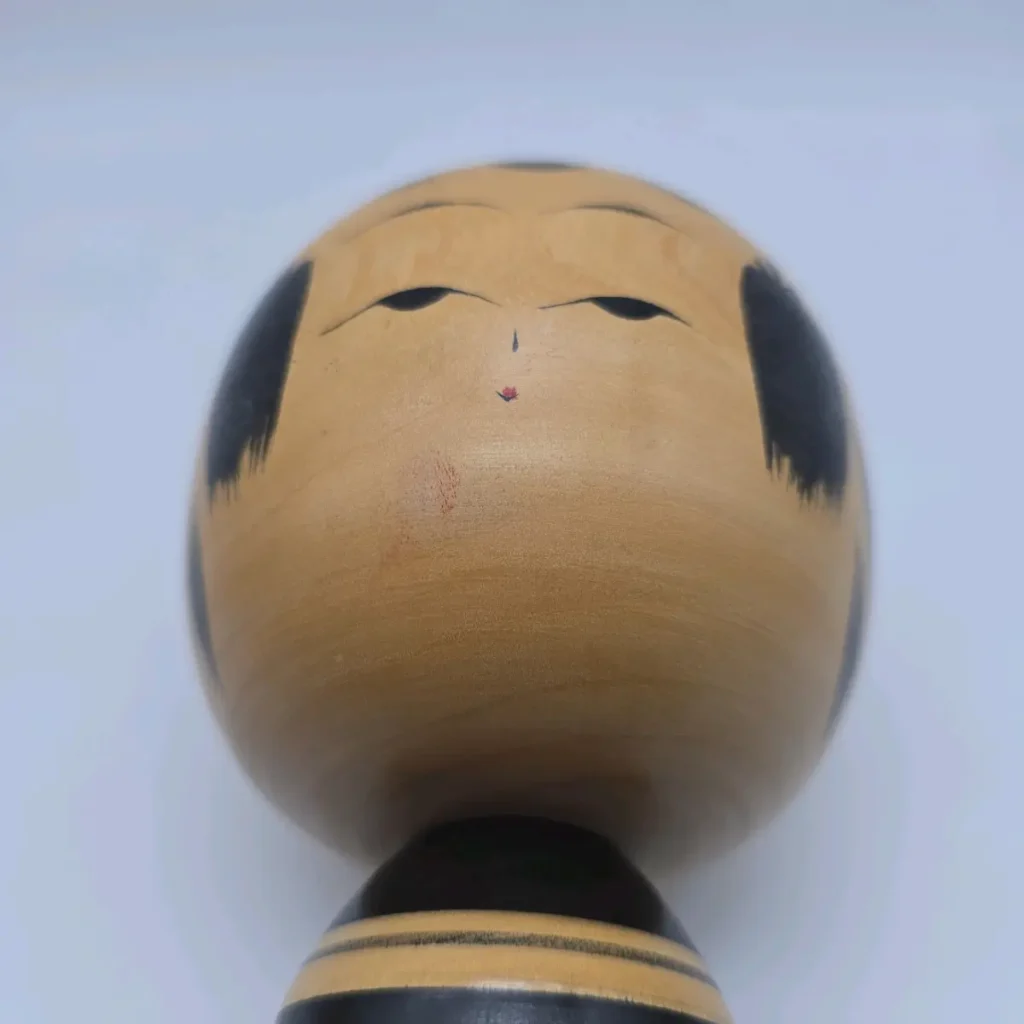
What a single quiet-faced wooden doll has carried across more than a century is nothing less than the Japanese way of seeing: to treasure things, to find beauty in what is lacking, and to fold prayer gently into daily life. That sense, born in an older and gentler time, has not disappeared. It is still here, still being handed on, quietly, to this day.
About the author | A former university educator and a 40-year veteran of counseling, writing from inside Japan about the culture and inner life you won’t find in a travel guide, for readers around the world.
kokeshi, Tohoku, Japanese crafts, wabi-sabi, mono no aware, monozukuri, sosaku kokeshi, Naruko, Japanese aesthetics, wooden dolls