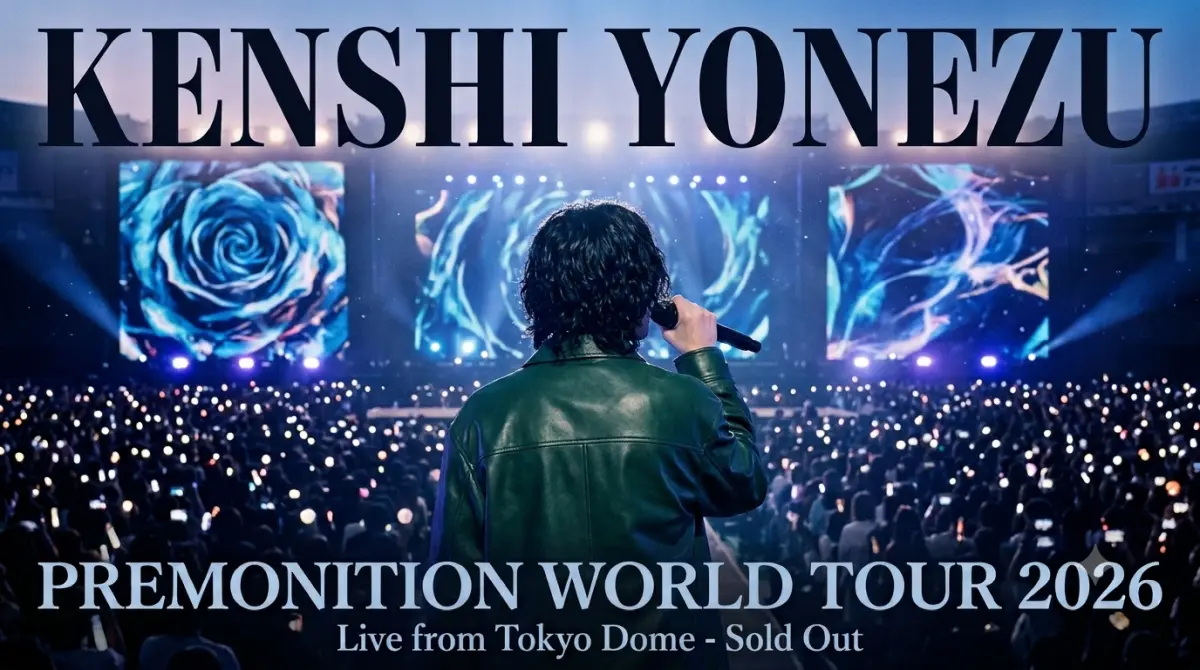
When Kenshi Yonezu released “KICK BACK”—the explosive opening theme for Chainsaw Man that became the first Japanese-language song in history to receive RIAA Gold Certification—international audiences instantly recognized his genre-defying songwriting and vocal intensity. Millions around the world know him through his iconic anime themes, including “Peace Sign” (My Hero Academia) and “Spinning Globe” (The Boy and the Heron).
However, writing as a music writer based in Japan, I have witnessed his rise from a completely different vantage point. To overseas listeners, Yonezu often appears as a brilliant anime soundtrack composer. To audiences inside Japan, he represents something far greater: a once-in-a-generation cultural icon who redefined the nation’s pop music landscape.
Here are the deeper truths about Kenshi Yonezu—from his legendary Vocaloid origins to his historic domestic milestones and 2026 global moves.
4 Things Overseas Fans Rarely Know About Kenshi Yonezu
1. Kenshi Yonezu’s Origin as the Vocaloid Legend “Hachi”
Long before recording vocals under his real name, Yonezu was already a revolutionist in Japan’s digital music subculture under the pseudonym Hachi (ハチ).
- The Niconico Era: Operating on the Japanese video platform Niconico Douga in the late 2000s and early 2010s, he produced Vocaloid tracks using synthesizer software.
- Cult-Classic Discography: Masterpieces like “Matryoshka”, “Panda Hero”, and “Donut Hole” defined an entire era of Vocaloid culture, racking up tens of millions of views and establishing his signature syncopated rhythms, dark fairy-tale imagery, and eccentric time signatures.
2. “Lemon” and Kenshi Yonezu’s Status as a National Household Name
While anime songs brought him global recognition, his 2018 ballad “Lemon” (written as the theme song for the TV drama Unnatural) broke virtually every music record in Japanese history.
- Historic Milestones: The official music video surpassed 800 million views on YouTube—a record unmatched by any other Japanese artist.
- Cross-Generational Reach: “Lemon” transformed Yonezu from a youth culture figure into a household singer loved by every demographic in Japan, from elementary school children to elderly listeners.
3. Kenshi Yonezu as a Complete Multidisciplinary Visual Auteur
Unlike standard pop vocalists who rely on external creative agencies, Yonezu exercises absolute creative control over his visual identity.
- Self-Illustrated Artwork: He personally draws the album covers, single artwork, and concept illustrations for his releases.
- Storyboarding and Animation: For several of his music videos, including “Control Number” and early Hachi releases, he personally hand-drew the storyboards and keyframes.
- Physical Expression: His music videos for tracks like “LOSER” and “Uma to Shika” showcase his distinctive, self-taught contemporary dance routines, making his physical performance an integral part of his artistic expression.
4. Kenshi Yonezu’s Tie-Ins with National Cultural Pillars
In Japan, Yonezu is trusted with the country’s most prestigious cultural projects.
- National Broadcasts & Cinema: He composed “Paprika” for the NHK 2020 Olympic sports broadcast project, authored theme songs for NHK morning dramas (Asadora), and provided the main theme for Studio Ghibli’s Academy Award-winning film The Boy and the Heron.
- Cultural Representation: His music is woven into the fabric of daily Japanese public life, played in railway stations, commercial campaigns, and major cinematic releases.
Domestic vs. Global Footprint: Kenshi Yonezu’s Dual Career Strategy
| Domain | Key Activities & Milestones |
|---|---|
| Domestic (Japan) | • National Stadium & Arena Tours: Selling out multi-day arena and stadium circuits within seconds. • Cultural Dominance: Regular appearances on national television broadcasts and soundtrack compositions for major Japanese films and dramas. • Record-Breaking Discography: Consistently topping the Billboard Japan Hot 100 and Oricon charts with every major release. |
| Global (International) | • Historic Streaming Achievements: Becoming the first Japanese artist to achieve RIAA Gold Certification for a Japanese-language song (“KICK BACK”). • Major Label Partnership: Global distribution and promotion through Republic Records. • International Tour Expansion: Headline arena dates across Asia, North America, and Europe. |
Latest 2026 Updates: Kenshi Yonezu’s Global Arena Expansion
Kenshi Yonezu continues his world-scale artistic evolution in 2026:
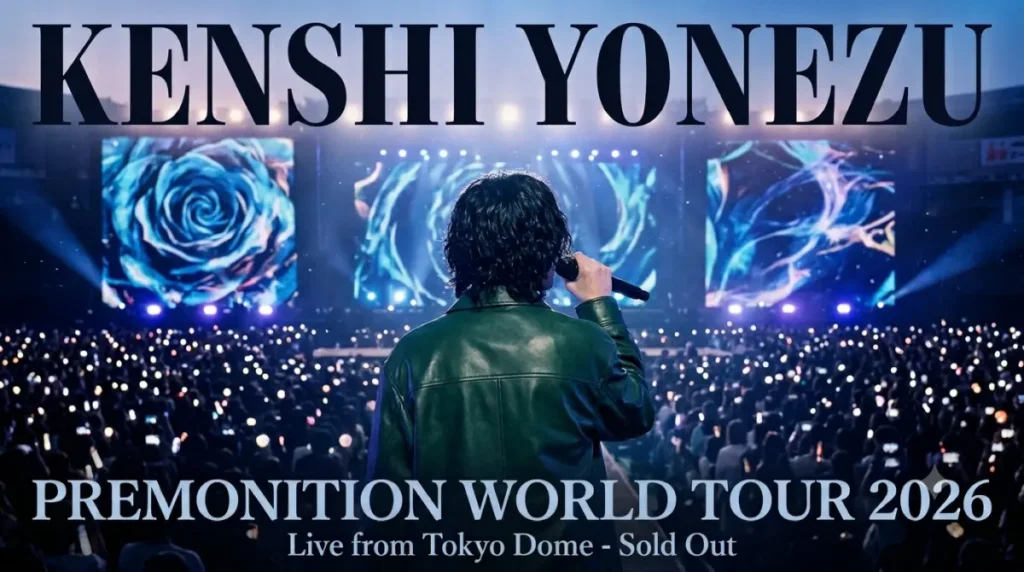
- The 2026 World Arena Circuit: Following his landmark domestic releases, Yonezu is launching an expanded international tour schedule across North America, Europe, and Asia, bringing his full visual and acoustic stage production to overseas audiences.
- High-Profile Cinematic Soundtracks: Continuing his streak of providing defining soundtracks for major global film releases and international animation projects.
- Expanded Streaming Discography: Remastering his early catalog—including his iconic Hachi Vocaloid releases—for spatial audio and global high-resolution streaming platforms.
Frequently Asked Questions (FAQ)
Q: Are Kenshi Yonezu and “Hachi” the exact same person?
A: Yes. Kenshi Yonezu originally created and published music under the stage name “Hachi” (ハチ) using Vocaloid software like Hatsune Miku. In 2012, he transitioned to releasing music under his real name using his own singing voice, though he occasionally revisits the Hachi persona for special Vocaloid releases like “Suna no Wakusei” (Dune) and “Donut Hole 2024”.
Q: Which non-anime Kenshi Yonezu songs should I listen to first?
A: To experience his full musical spectrum beyond anime themes, start with “Lemon” (his historic pop ballad), “LOSER” (funk-rock with incredible dance choreography), “Kanden” (感電) (groovy brass-heavy pop), and “Uma to Shika” (馬と鹿) (a dramatic orchestral anthem).
Q: What is the meaning behind Kenshi Yonezu’s album art illustrations?
A: Yonezu draws all his album covers himself to directly translate the surreal, visual worlds in his mind into tangible art. His illustrations often feature mythical creatures, intricate line work, and melancholic figures that mirror the lyrical themes of human isolation, memory, and redemption found in his songs.
Beyond the Anime Soundtrack: Japanese Music Titans You Need to Know

What’s Actually Trending in Japan — and Why It’s Happening