Everyone knows Toyota the carmaker. Almost no one outside Japan knows how it began — not with an engine, but with a loom.
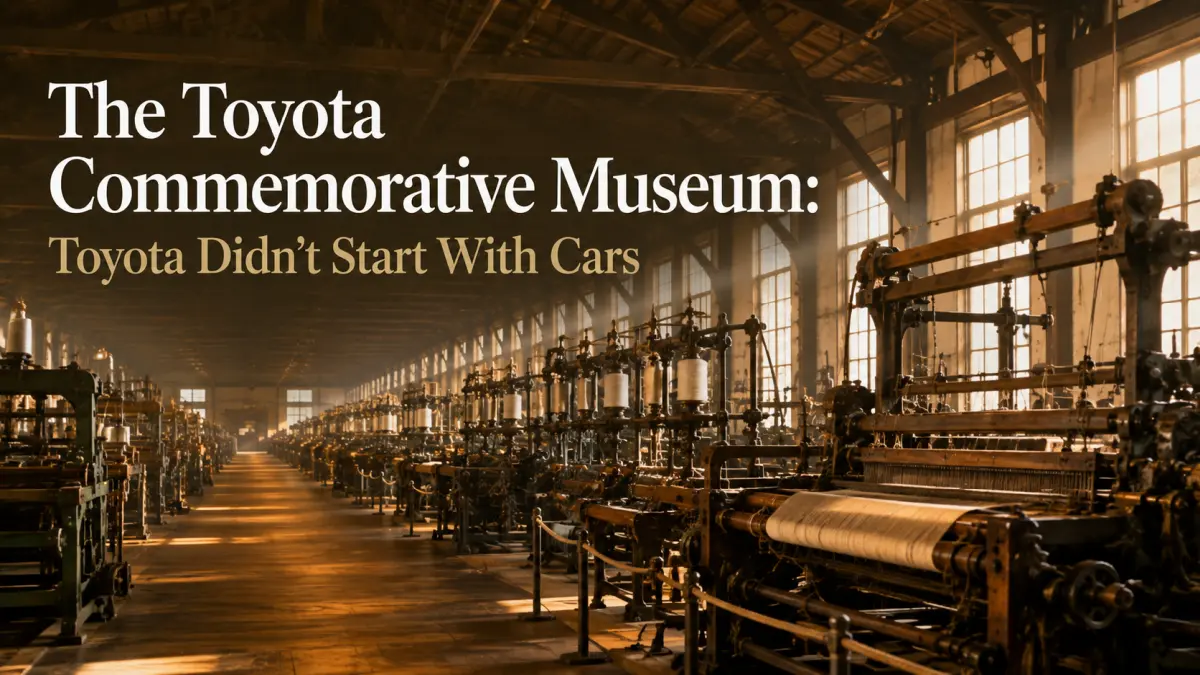
And the proof is standing in Nagoya, inside the original red-brick weaving mill where the whole story started.
If “the city that built modern Japan” sounds like a slogan, this is the building that makes it literal — and it’s one of the most quietly impressive museums in the country.
Before the Cars, There Were Looms
The founder of the Toyota Group was Sakichi Toyoda — spelled with a d — an inventor so prolific he’s remembered as the “King of Japanese Inventors.” He spent his life perfecting automatic weaving machines, culminating in the celebrated Type G automatic loom, work driven in part by wanting to ease the labour of weaving for the women in his family.
His eldest son, Kiichirō, then took that loom technology and made a leap that looked almost reckless at the time: into building automobiles. That pivot became Toyota Motor Corporation.
The museum occupies the actual 1911 pilot mill Sakichi built to develop his looms, and it opened in 1994. So you’re not reading about the origin on a placard in some glossy corporate showroom — you’re standing inside the origin.
The Machines Actually Run
Here’s what sets this apart from a typical company museum: most of the historic machinery isn’t behind glass. It works.
The Textile Machinery Pavilion is a vast, cathedral-like hall, and staff fire up the looms in live demonstrations — everything from a hand-spinning wooden loom to the revolutionary Type G to modern high-speed air-jet machines. When the hall is running at full tilt, the clatter is the whole point; it’s the sound of an industry being born.
The Automobile Pavilion then walks you through the leap to cars, with cutaway engines, robots, and live casting, forging, and machining demonstrations that make manufacturing genuinely gripping even if you’ve never cared about a car in your life. There’s also a hands-on “Technoland” area that keeps kids busy, and a steam-engine demonstration that’s a favourite for photos.
One practical tip that separates a good visit from a memorable one: the live demonstrations run on a set schedule.
Check the day’s timetable at the entrance (or on the official site) and build your visit around the loom hall and the forging runs, rather than wandering in and hoping.
Worth It Even If You Don’t Like Cars
The museum’s stated mission is monozukuri — the Japanese ethos of making things with care — and that’s really what you come away with.
This isn’t an advertisement for a car brand; it’s the story of how a nation industrialized, told through one family’s near-obsessive devotion to getting the machinery right. Visitors who arrive indifferent to engines routinely leave impressed, because the through-line isn’t cars or looms specifically — it’s craftsmanship as a way of thinking. That’s a very Nagoya idea, and this is the best place in the city to feel it.
Practical Notes
The English support here is unusually good: signage is bilingual throughout, there’s a free audio-guide app (English, Chinese, Korean), and there are free 45-minute English guided tours — typically the Textile Machinery Pavilion at 14:00 and the Automobile Pavilion at 15:15, with sign-up at the pavilion entrance.
The museum is open Tuesday to Sunday, roughly 9:30–17:00, and closed on Mondays. Admission runs around 1,000 yen for adults, with discounts for students and children; because hours, fees, and the demonstration schedule can shift, confirm the current details first: Toyota Commemorative Museum official site (English). Give it two to three hours at a minimum — more if the demonstrations pull you in, which they will.
Getting there is easy from Nagoya Station: it’s a three-minute walk from Sako Station, one stop away on the Meitetsu line, or about a twenty-minute walk. It’s also a stop on the Me-guru sightseeing loop bus — the same bus that serves Nagoya Castle, so the two pair well on a single day pass.
Nagoya Castle: The Honest Truth (the Keep Is Closed — Go Anyway)

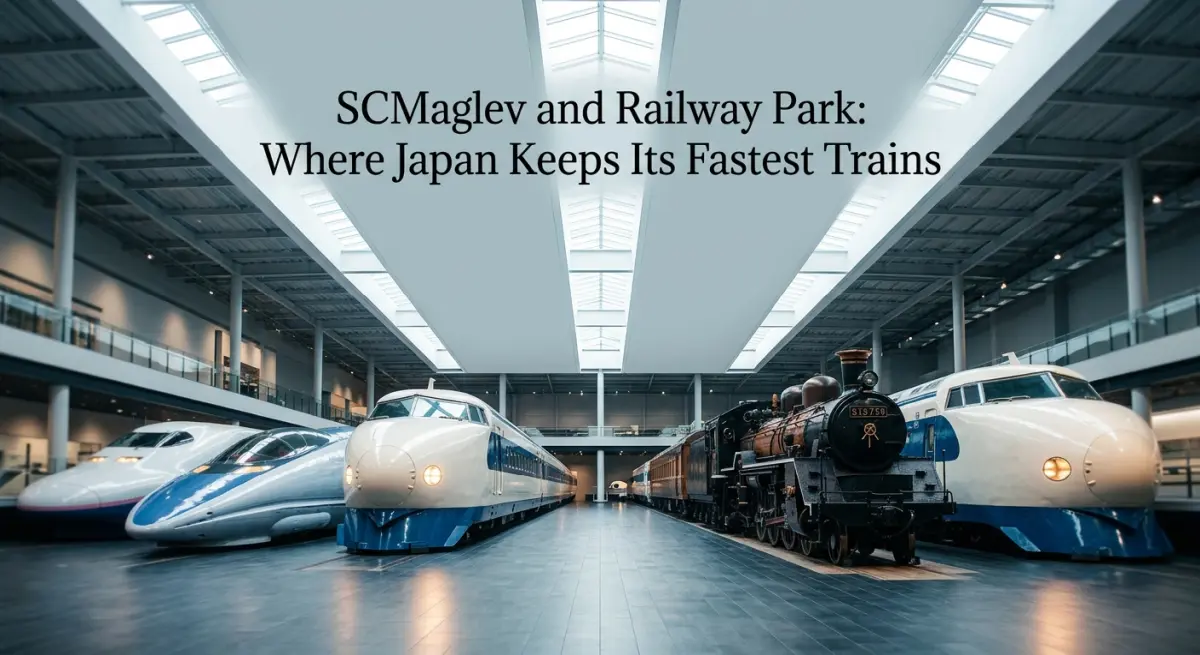
And for a full technology day, it pairs naturally with the SCMaglev and Railway Park across town.
[cross-link → /scmaglev-railway-park-nagoya/ coming soon]
There’s a reason this story stays hidden. Nagoya built the loom that built the company that built the cars the whole world drives — and then didn’t bother telling anyone. The origin sits unadvertised in a skipped city, inside a century-old brick mill, running its machines for whoever thinks to come. Monozukuri isn’t loud. Neither is Nagoya. That’s exactly why both are worth paying attention to.
Wait, Nobody Skips Osaka. So Why Does Everyone Skip Nagoya?