Picture the reason you’d visit Nagoya Castle: the great white tower crowned with golden shachihoko, and you climbing it for the view. Here’s what almost no guide tells you plainly before you buy a ticket — you can’t.
The main keep has been closed since 2018, and it won’t reopen for years. Plenty of visitors turn up, learn this at the gate, and leave disappointed.
That’s the mistake. The keep being shut is real, but writing off the castle because of it means missing the single most beautiful thing on the grounds.
Here’s the honest version: what’s closed, what’s genuinely worth your time instead, and — if you truly came to climb a castle — where to go within half an hour to climb a real one.
The Bad News First: You Can’t Climb the Keep
Let’s get it out of the way. The tower you see is a 1959 concrete reconstruction, and it closed in 2018 over earthquake-safety concerns. The city is rebuilding it entirely in wood, faithful to the original 1612 design — an extraordinary project, but a slow one, currently targeted for completion around 2032 and already tangled in delays and public debate.
Until then you can photograph it from outside, but you cannot go in. So don’t budget time for a tower climb, and don’t let anyone sell you the visit on that basis.
The Good News: Honmaru Palace Is the Real Masterpiece
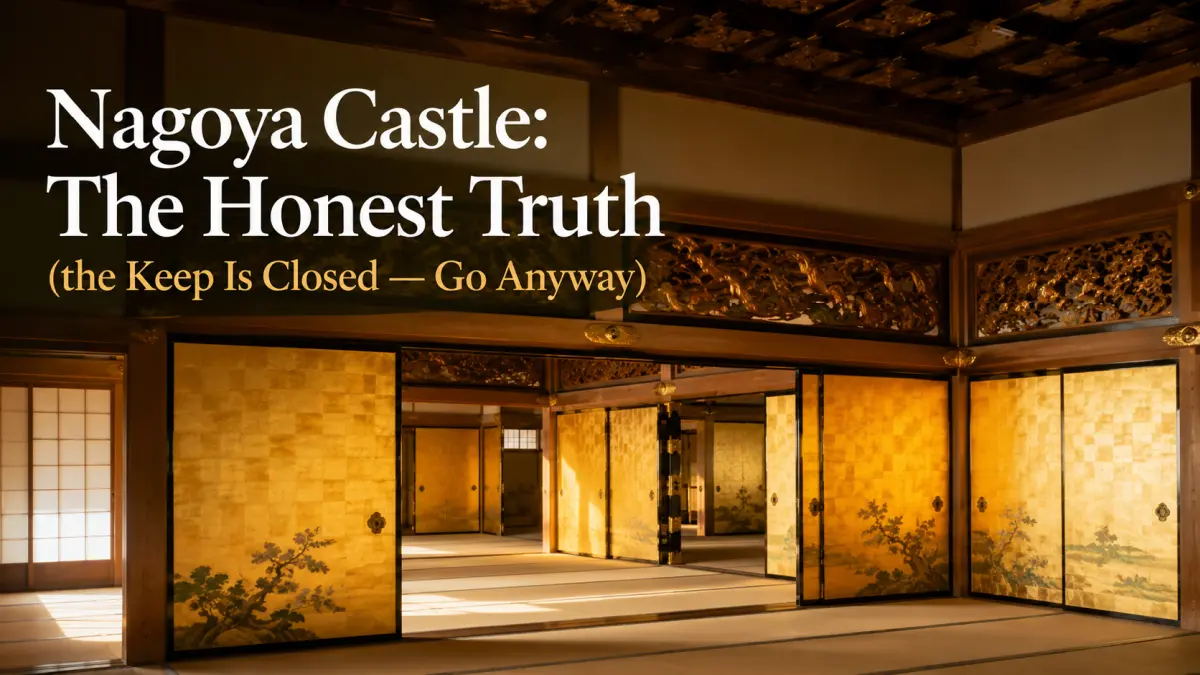
Here’s what the closed keep quietly distracts from. Beside it sits Honmaru Palace, reopened in 2018 after a decade-long reconstruction using only traditional materials and Edo-period techniques — widely considered the most faithful historical palace reconstruction in Japan.
Walk through and the rooms escalate in grandeur the deeper you go: gold-leaf sliding-door paintings, intricately carved wooden transoms, lacquered columns, tatami laid room after room.
The layout isn’t decoration for its own sake — the audience halls grow more opulent according to the rank of the guest being received, so you’re physically walking up the feudal hierarchy as you move toward the lord’s chamber.
Entry is included in the castle admission; shoes come off at the door. If you only do one thing here, do this. It rewards a slow, unhurried walk far more than any tower museum would.
Don’t Skip the Grounds
The rest of the complex earns its two-to-three hours. Those golden shachihoko on the roofline — mythical tiger-fish said to summon rain and ward off fire — are over two metres tall and plated in real gold.
The 400-year-old stone walls and corner turrets are originals that survived the war. In spring the grounds hold hundreds of cherry trees; year-round, the Kinshachi Yokocho castle-town streets just outside the gates are a good place to eat your way through the local specialities.
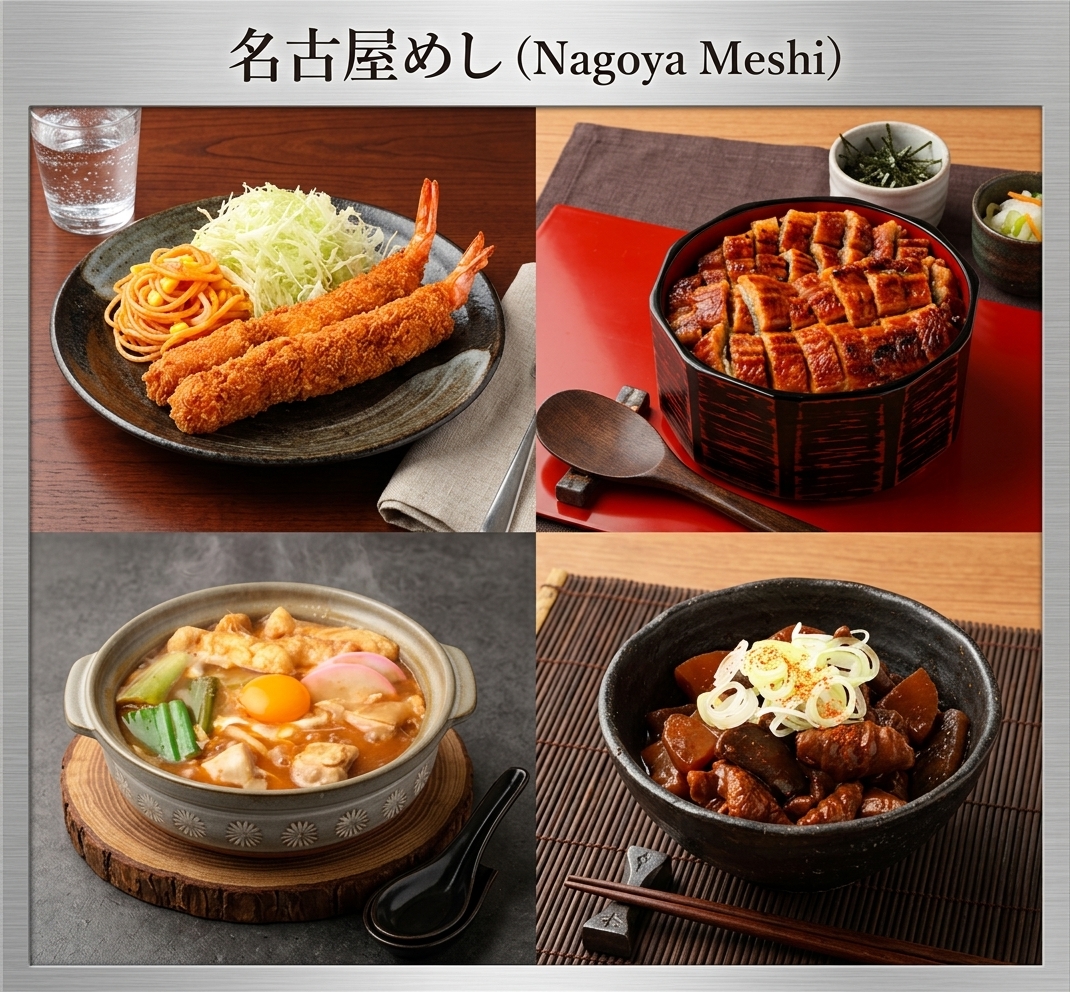
What Is Nagoya-meshi? The Bold Food Culture Kansai Can't Give You

One tip most visitors miss: free English-speaking volunteer guides from the Aichi Goodwill Guides Network gather at the East Gate daily around 12:30, no reservation needed for small groups. An hour with one of them turns a stone-wall stroll into the actual story of the place.
If You Really Came to Climb a Castle: Go to Inuyama
Here’s the consolation that’s arguably an upgrade. About half an hour from Nagoya sits Inuyama Castle — one of only twelve original castle keeps left standing in Japan, and a designated National Treasure.
Not a reconstruction: the real thing, with the steep, worn original stairs and a top-floor balcony looking out over the Kiso River. If your heart was set on climbing something ancient, Inuyama gives you what Nagoya Castle can’t right now, and it’s a genuinely older, rarer experience than the tower you’d have queued for.
Practical Notes
Getting there is easy: take the subway Meijō Line to Nagoyajō Station (M07) and it’s about a five-minute walk from Exit 7, with the East Gate the handier entrance. Alternatively, the Me-guru sightseeing loop bus runs from Nagoya Station in around 20–25 minutes; its one-day pass is worth it if you’re also visiting the Toyota Commemorative Museum, which the same loop serves. [cross-link → /toyota-commemorative-museum/ coming soon]
The grounds are open roughly 9:00–16:30 with last entry at 16:00, closed December 29–January 1. Admission has long been very cheap, but note it rises on October 1, 2026 (the adult fee jumps to ¥1,000), so check the current price and any updates on the keep before you go: Nagoya Castle official site (English).
There’s something fitting in all this. Nagoya Castle greets you with a closed sign on its most famous building — and keeps its actual masterpiece, the palace, quietly behind it, unmentioned on most postcards.
That’s the whole city in one visit: leading with what’s shut, hiding what’s extraordinary, and trusting you to look past the obvious. Look past it.
Wait, Nobody Skips Osaka. So Why Does Everyone Skip Nagoya?