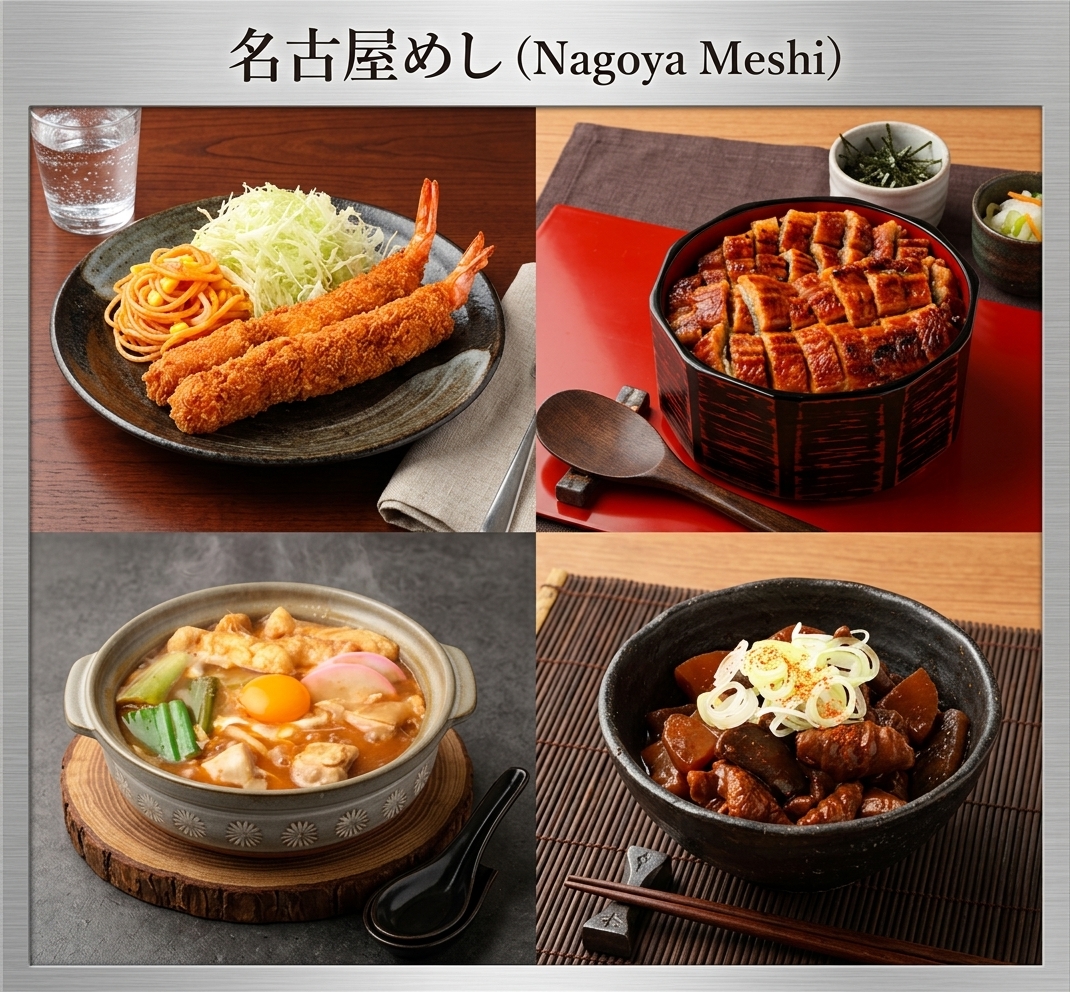
Ask people what’s wrong with Nagoya and they’ll talk for a while. Ask what’s right with it and, almost every time, the first word is food. Even the skeptics concede this one. The city’s cooking has its own name — Nagoya-meshi — and it tastes like nowhere else in Japan: darker, saltier, more unapologetic.
If you’re stopping in Nagoya for a single reason, this is a strong candidate for it.
Here’s the thread running through nearly all of it: red miso.
Aichi is hatchō miso country — a dense, dark, aged soybean paste that’s bolder and less sweet than the miso most travelers meet in Tokyo or Kyoto.
Kansai does refined; Nagoya does deep. Once you notice the red-miso backbone, the whole cuisine snaps into focus.
One practical note before the good part: opening hours, prices, and queues change, and the famous places draw lines.
Check the current details on each restaurant’s Tabelog page before you go, and arrive early for the big names.
Miso-katsu
A thick, deep-fried pork cutlet drowned in a glossy red-miso sauce, served on a hot plate over shredded cabbage.
It sounds heavy and it is — in the best way. The sauce is savory-sweet and clings to everything, and one bite explains the entire city’s palate.
Where: Yabaton (Yabachō main branch), running since 1947 near Ōsu, is the name locals and visitors reach for first. There are convenient branches inside and around Nagoya Station too.

Hitsumabushi
Nagoya’s answer to eel-over-rice, and the dish I’d tell a first-timer not to skip. Finely chopped grilled eel is spread over rice in a wooden tub, and you eat it in stages: the first bowl plain, the second with condiments (nori, wasabi, spring onion), the third poured over with dashi or tea like ochazuke — then a fourth however you liked best. One dish, three or four experiences.
Where: Atsuta Hōraiken (Jingū branch) sits right by Atsuta Shrine and has served this since 1873 — it even holds the hitsumabushi trademark. It pairs naturally with a visit to the shrine itself. [cross-link → /atsuta-shrine-kusanagi-sword/ coming soon] Expect a wait; go early.
Tebasaki
Peppery, glazed fried chicken wings, built for beer. Nagoya’s version is double-fried, brushed with a sweet-savory sauce, then hit hard with black pepper and sesame.
They’re a little messy and completely addictive, and locals have a whole technique for stripping the bone clean.
Where: Sekai no Yamachan (main branch) in Sakae is the pepper-forward icon, and helpfully keeps an English/Chinese/Thai menu for visitors.
The style has two founding houses, by the way: Furaibō started tebasaki in the 1960s; Yamachan made the aggressive-pepper version famous in 1981.

“Taiwan” Ramen — the Dish That Isn’t From Taiwan
Here’s the fact that makes people do a double-take: Taiwan ramen was invented in Nagoya, not Taiwan. A fiery, chili-and-chive, minced-pork ramen created by a Nagoya restaurant’s Taiwanese founder around 1960, it became such a local staple that it now stands beside miso-katsu as core Nagoya-meshi — while remaining a bowl you genuinely won’t find in Taiwan.
Where: Misen, Imaike main branch is the originator and the local pilgrimage spot. The menu leans Japanese and Chinese with photos to point at, so it’s manageable in English; there’s also a branch at Nagoya Station if you’re short on time.

And a Few More, If You Have the Appetite
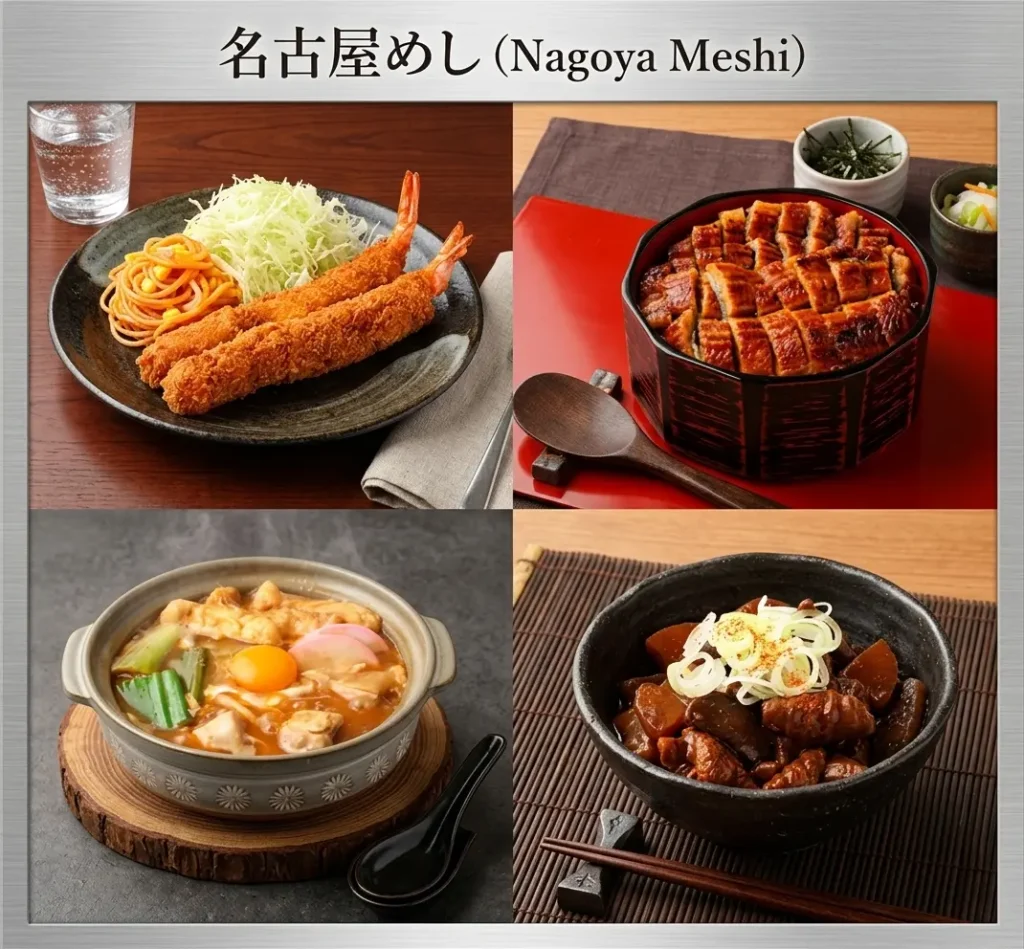
The canon runs deeper than four dishes. Miso-nikomi udon — chewy, firm udon simmered in a red-miso broth in a clay pot. Doteni — offal and daikon slow-cooked in miso until meltingly rich. Ebi-fry — Nagoya’s near-obsessive love of crumbed, deep-fried prawns. And for breakfast, ogura toast — thick buttered toast topped with sweet red-bean paste, a “morning service” tradition worth waking up for.
Where to Find It All
Rather than hunt blind, start with the official source. The Nagoya Meshi Promotion Council — run by the city, the prefecture, and the local chamber of commerce — keeps an English site with a restaurant finder and a downloadable guide map. It’s non-commercial and inbound-focused, which makes it a rare thing: a genuinely useful official resource. For individual restaurants, the English version of Tabelog carries the reviews, photos, hours, and maps you’ll want before joining a queue.
There’s a quiet tell in all of this. A whole public body exists to export these dishes to the world — that’s not what a city that truly thinks it has “nothing” does. Nagoya undersells almost everything about itself, except the food. Read that as the crack in the modesty: this is a place that’s quietly, deeply proud, and the table is where it shows.
Make It at Home
Most travelers come to eat these, not cook them — recreating a trip in the kitchen is more of a Japanese pastime than an overseas one. But the finished dishes are worth seeing plated, and the Promotion Council has produced a set of short cooking videos.
The Council’s videos cover a slightly different lineup, including a few dishes beyond the four above(Youtube).
Cooking videos courtesy of the Nagoya Meshi Promotion Council.
Nagoya-meshi is the single most persuasive answer to “why stop in a city everyone skips.” Come hungry, order the red-miso things, and let the food make the argument the city is too modest to make for itself. Wait, Nobody Skips Osaka. So Why Does Everyone Skip Nagoya?