If you love Studio Ghibli, planning the visit comes with two quiet anxieties.
The first: there’s a museum and a park, they’re in different cities, and nobody explains plainly which one you actually want.
The second, once you’ve picked: you’ve heard the tickets are almost impossible to get from outside Japan.
Both worries are reasonable. This guide settles the first in a few minutes and walks you through the second so you don’t lose a morning refreshing a sold-out page.
One note before we start: prices, pass types, and sale dates change often. I’ll point you to the official English site for anything that moves, and I’d confirm there before you book.
First, They Are Two Different Places
This trips up almost everyone, so let’s clear it in one breath.
The Ghibli Museum is in Mitaka, on the western edge of Tokyo. It’s small, intimate, and it’s about how animation is made — a building you wander through, not a place you ride. If your trip stays around Tokyo, this is your Ghibli day, and I’ve written the how-to for it separately: how to get Ghibli Museum tickets.
Ghibli Park is something else entirely. It’s in Nagakute, in Aichi Prefecture, just outside Nagoya — not in Nagoya city itself, but Nagoya is the gateway you travel from.
Instead of explaining animation, it lets you physically step into the film worlds across several themed areas. The two run on separate tickets, and one is not valid at the other, so you can’t hedge — you choose.
The honest way to decide is by your route, not by which is “better”:
- Tokyo-only trip? Go to the Museum. Don’t add a bullet-train day for the Park.
- Traveling between Kansai and Tokyo — or you simply want to walk inside the worlds? Go to the Park, and fold it into a Nagoya stop. It sits neatly on the line you’re already taking.
If you’re weighing Nagoya as a whole, the Park is the single strongest reason to break your journey there: [Wait, Nobody Skips Osaka. So Why Does Everyone Skip Nagoya?]

What You’re Actually Booking
A quick expectation-setter, because it changes which ticket you buy.
Ghibli Park is spread across five themed areas, and it is immersive rather than thrilling — think recreated film settings, walking paths, and a few gentle, child-facing rides, not roller coasters. Seeing all of it is a full, satisfying day rather than a two-hour stop.
That’s why the pass you choose matters, and why I’m sending you to the source for it: the pass types and current prices are exactly the kind of detail that changes.
Check them on the official English site — Ghibli Park (English) — and, in short, the top-tier pass is the one that gets you inside everything. 👇

The Hard Part: Getting Tickets from Overseas
Here’s the bottleneck everyone warns you about, and they’re not exaggerating. The good news is the process is knowable once someone lays it out.
There are two official routes for overseas buyers: the LAWSON TICKET English site and Klook. Both are legitimate; you don’t need a Japanese address or a local friend.
On the LAWSON TICKET English site, the fastest way to find the current listings is simply to search “Ghibli” — it pulls up the Ghibli Park ticket pages directly. [link: https://l-tike.com/search/?keyword=Ghibli]
Bookmark that search before the 10th so you’re one click from the queue when sales open at 2:00 PM.
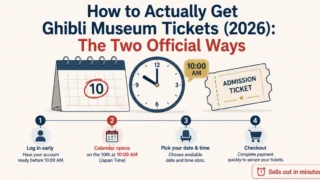
The mechanism is the part to internalize. Tickets go on sale on the 10th of each month at 2:00 PM Japan time, for dates a short window ahead — check the official ticket page for exactly which dates open on the next 10th, because that window shifts.
Popular dates, especially weekends, can sell out within minutes of the window opening. So this is less “buy a ticket” and more “be ready at 2:00 PM sharp.”
A few things that save people real grief:
- Make your account and log in before 2:00 PM. The scramble is won in the first minutes.
- Overseas visitors buy the day-pass options rather than single-area tickets. Decide your pass in advance so you’re not choosing under pressure.
- Entry is by an e-ticket on your smartphone, and you’ll need the passport matching the booking on the day. Book in the traveler’s real name.
The current pass lineup, prices, and the live purchase link are all on the official page: Ghibli Park tickets — overseas purchase.
If You Miss the 10th-of-the-Month Scramble
Don’t treat a sold-out date as the end. This is where most guides leave you stranded, and it’s the part that matters most.
If the face-value window slips past you, the package route often still has room: JTB Sunrise Tours, Viator, and KKday sell plans that bundle Ghibli Park entry (some with accommodation in Aichi), and Klook frequently has inventory when the official scramble is over.
You may pay a little more than face value, but you trade the 2:00 PM stress for a confirmed booking — a fair deal for most travelers on a fixed itinerary.
Getting There from Nagoya
Access is simpler than it looks. From Nagoya Station, take the Higashiyama subway line to Fujigaoka, then transfer to the Linimo — which happens to be Japan’s only magnetically levitated line in everyday passenger service, a small bonus for the rail-curious — and ride to Ai-Chikyuhaku-kinen-koen (Expo Memorial Park) Station. Door to door it’s roughly 50–60 minutes with a single transfer.
One thing to plan around: there is no direct car access to the park entrance, and the park has no lot of its own — drivers use the Expo 2005 Aichi Commemorative Park parking. The train is the dependable choice.
For live times and the current fare on your travel date, drop the route into Google Maps — Nagoya Station → Ghibli Park (Google Map)— or check the park’s own official directions page, which also lists the direct Meitetsu bus from Nagoya Station and the airport shuttle.
Can’t Get In? Nagoya Is Still Worth the Stop
Here’s the reassurance I’d want if I’d struck out on tickets: the trip isn’t wasted. The whole argument for stopping in Nagoya is that the city rewards you even without its headline attraction — starting with a food culture Kansai can’t give you. If the Park doesn’t work out this time, let it be the reason you discovered the rest.
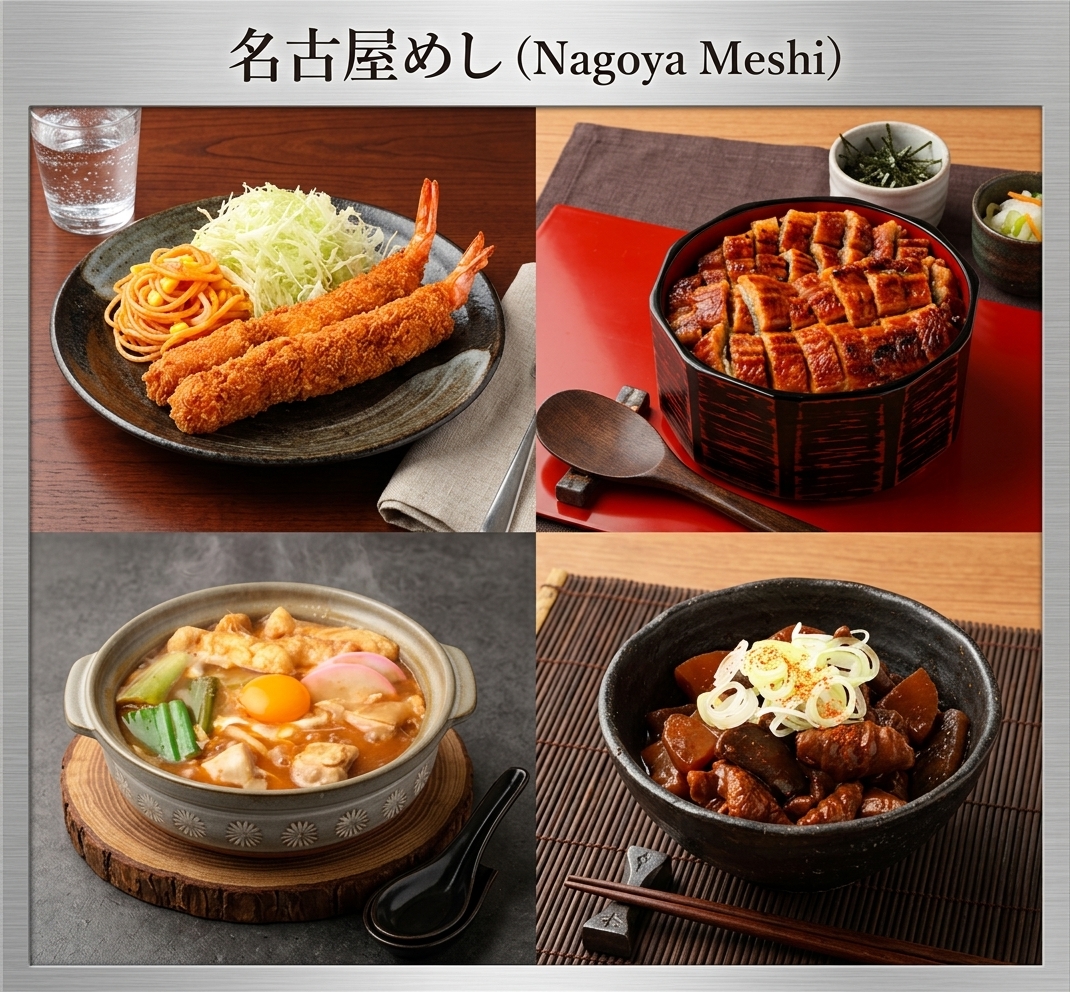
- The bold, red-miso food the city is built on: What Is Nagoya-meshi? The Bold Food Culture Kansai Can’t Give You
- The seven reasons to stop here at all: Wait, Nobody Skips Osaka. So Why Does Everyone Skip Nagoya?
Ghibli Park is worth the effort of getting in. But the city you’d pass through to reach it turns out to be worth the stop on its own — which, if you’ve read the rest of this site, is rather the point.