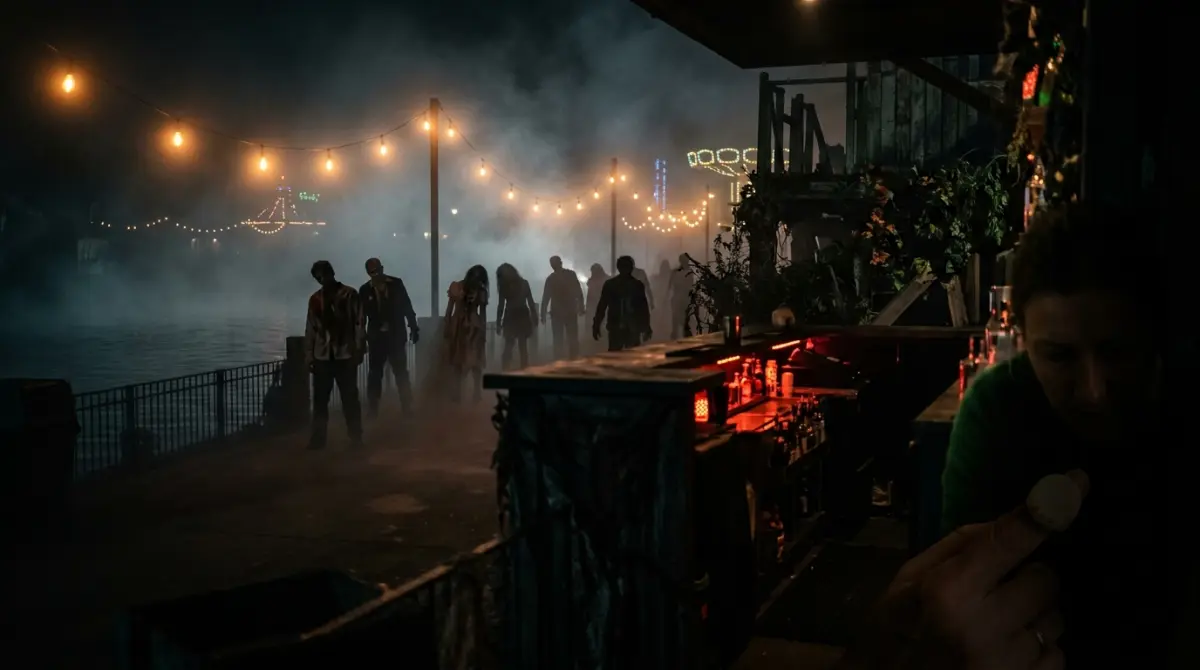
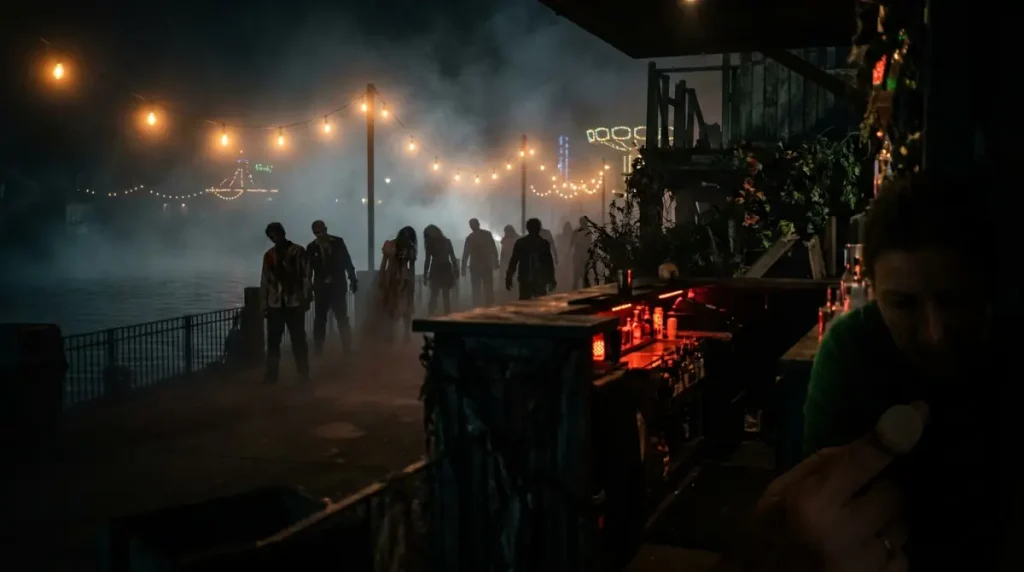
Picture a theme-park café at night. You walk up to order a drink, and the person behind the counter is a zombie. Not a costumed greeter waving at kids, an actual snarling, blood-streaked member of staff who has, apparently, been infected along with everyone else.
That’s the “Zombie Bar,” debuting this year at Universal Studios Japan’s Halloween Horror Nights. After 6 p.m., a normal waterfront café is overrun by zombie crew serving cocktails themed after past monsters.
And it captures something that surprises a lot of first-time overseas visitors: Japan doesn’t really do the Halloween you grew up with.
This isn’t the Halloween you know
In much of the West, Halloween means costumes, candy, and pumpkins on the porch. It’s cute, communal, and mostly for kids.
Japan took the same holiday and turned the dial all the way to horror. At USJ, the daytime is family-friendly, but once the sun goes down the park becomes something else entirely: streets flooded with zombies, walk-through haunted attractions, and shows built around 15 years of accumulated nightmares. Halloween here isn’t a costume you put on. It’s a place you enter, knowing it will chase you.
So why the horror? Why the immersion?
The short answer: Japan is very good at selling experiences, not things.
Japanese leisure culture leans hard into what’s sometimes called “experiential consumption”, paying for a moment you live through rather than an object you take home. A haunted maze you can’t un-see, a night you’ll retell for years, a scare you shared with friends: that’s the product. The Zombie Bar takes it one step further by breaking the invisible wall between guest and staff. If even the crew are infected, there’s no safe corner, no one to signal “it’s just pretend.” The immersion becomes total, and that totality is the point.
It’s the same instinct you see elsewhere in Japan, where ordinary acts get turned into designed experiences. (If you’ve ever wondered why grown adults happily line up for capsule toys, it comes from the same place: the joy is in the doing, not just the having.)

The anime-horror connection
There’s a second reason Japan’s version hits differently: it plugs straight into stories people already love.
This year’s headline attractions lean on Resident Evil (marking its franchise’s 30th anniversary) and Chainsaw Man, alongside home-grown horror like Sadako. For fans, walking into a maze based on a game or anime they know isn’t a generic scare, it’s stepping inside a world they’ve only watched from the outside. Horror plus fandom plus physical immersion is a potent mix, and it’s a big part of why international anime and gaming fans now build entire Osaka trips around this season.
The bigger picture
Strip away the blood and the branding, and USJ’s Halloween is a very Japanese idea: take a familiar thing, in this case a Western holiday, and rebuild it as an experience so immersive you can’t stay a spectator. The West dresses up as the monster. Japan drops you into a world where the monsters, and the staff, come for you.
Before you go (the practical bits)
If you’re tempted to visit, a few things worth knowing:
- Dates: Halloween Horror Nights runs September 11 to November 8, 2026 (the wider autumn season starts a day earlier).
- Ticket: You don’t need a separate ticket. The horror content is included with a normal Studio Pass, though Express Passes exist if you want to skip queues on the indoor mazes.
- Age limits matter: Some indoor attractions have age restrictions (the Resident Evil maze is age-gated, and there’s an even stricter adults-only experience this year). Halloween Horror Nights is not recommended for very young children. Check the exact age rules on the official site before you build your night around a specific maze.
- Official info: https://www.usj.co.jp/web/ja/jp
Details and age gates can change, and some names differ between Japanese and English pages, so confirm on the official USJ site before you plan.
USJ sits in Osaka, which is worth a few days in its own right, and not for the reasons most people expect. See the side of Osaka that surprises visitors, or head back to What’s Actually Trending in Japan for more on how the country keeps reinventing the familiar.👇