Ask a first-time visitor to sketch out a trip to Japan and the route writes itself: Tokyo, then Kyoto, then Osaka. Nagoya — the country’s fourth-largest city, sitting right on the line between them — gets stepped over so reliably that Japanese has a word for it: Nagoya-tobashi, “Nagoya skipping.”
And the harshest reviews don’t come from tourists. A survey once ranked Nagoya the most boring of Japan’s major cities (conducted by the City of Nagoya in 2016, as reported by The Japan Times), and locals will say it to your face: there’s nothing here.
Here’s what a decade of skipping gets wrong. Nagoya has two things you cannot get anywhere in Kansai: a food culture so bold and specific it carries its own name — Nagoya-meshi — and the only Studio Ghibli theme park on Earth.
If you’re deciding whether to bother, those are the reasons. Not ten. Not a listicle. Two.
I’m not going to hand you a ranked pile of monuments. What I find more interesting, after years of watching how places talk about themselves, is why a city of two million insists it’s nothing — and what that reflex quietly protects.
That’s the Nagoya most visitors, and most guidebooks, never reach.
Already in Osaka? Nagoya Is Barely 50 Minutes Away
You probably didn’t plan a trip to Nagoya. Most people don’t.
The real question is the one that surfaces once you’re already in Kansai: I’ve come all this way — can I add one more place without wrecking the schedule?
That’s exactly where Nagoya fits. It isn’t a detour; it’s on the way. From Shin-Osaka, the Tōkaidō Shinkansen reaches Nagoya in about 50 minutes for around 6,680-yen, on the same line you’ll take back toward Tokyo.
So a Nagoya stop costs you almost nothing but a few hours — and a change of pace, which is the whole point. After the temple queues of Kyoto and the crowds of Osaka, a city that is uncrowded and intense is a genuine palate cleanser. In 2026, “somewhere that isn’t shoulder-to-shoulder” is its own kind of luxury.
If you haven’t mapped Osaka yet either, start there and swing here on the way out. Wait, That’s in Osaka? — 7 Places That Break the Image . The two cities make a better pair than either does alone.
Seven Reasons the Skippers Are Wrong
None of these will show up on a Tokyo–Kyoto–Osaka highlight reel. That’s precisely why they earn the stop.
- Ghibli Park.
The world’s only Studio Ghibli theme park is here — technically just outside the city, in Nagakute. It’s a completely separate place from the Ghibli Museum in Tokyo, with its own tickets that are notoriously hard to land from overseas. It needs a guide of its own.
Ghibli Park vs the Ghibli Museum: Which One to Visit — and How to Actually Get Tickets(Internal Link)Related article[→ How to Actually Get Ghibli Museum Tickets (2026): The Two Official Ways] - Nagoya-meshi.
Red-miso pork cutlet, charcoal-grilled eel layered over rice (hitsumabushi), peppery fried chicken wings — and, yes, “Taiwan ramen,” a dish that was actually invented in Nagoya, not Taiwan. Bolder and heavier than anything Kansai will put in front of you.[→ What Is Nagoya-meshi? The Bold Food Culture Kansai Can't Give You]
There’s even an official Nagoya Meshi body — backed by the city itself — devoted to exporting these dishes to the world, which tells you how seriously the locals take their food.[link: https://en.nagoya-meshi.jp/] - Nagoya Castle — the honest truth.
Nagoya Castle — the honest truth. Here’s what the brochures leave out: the main keep is closed for earthquake retrofitting until around 2032 (as reported by Japan Today), so you can’t climb it.
Go anyway, for the reconstructed Honmaru Palace next door — and if you want a castle you can actually walk inside, there’s an original one about thirty minutes away.
Nagoya Castle: The Honest Truth (the Keep Is Closed — Go Anyway) - Atsuta Shrine and the sacred sword.
One of the three Imperial Regalia — the legendary Kusanagi sword — is said to be enshrined here, which makes Atsuta second in sanctity only to Ise. Almost no visitor knows it as they walk through.Atsuta Shrine: Nagoya Quietly Holds One of Japan's Three Sacred Treasures - The Toyota Commemorative Museum.
Toyota didn’t start with cars; it started with looms. This is the origin story of how a textile town became the engine of modern Japan, told through machines you can watch actually run.The Toyota Commemorative Museum: Toyota Didn't Start With Cars - SCMaglev and Railway Park.
For anyone who loves trains: bullet trains you can board and a look at the maglev future — reached, fittingly, on the Linimo, Japan’s only maglev line in daily passenger service.SCMaglev and Railway Park: Where Japan Keeps Its Fastest Trains - Osu.
Set the monuments aside for a moment. Osu folds retro arcades, second-hand racks, an old temple and street food into one walkable district — the city’s real pulse, and the best place to feel why locals are fonder of Nagoya than they let on.
Osu: The Nagoya That Doesn’t Perform for Anyone
The City That Writes Itself Off
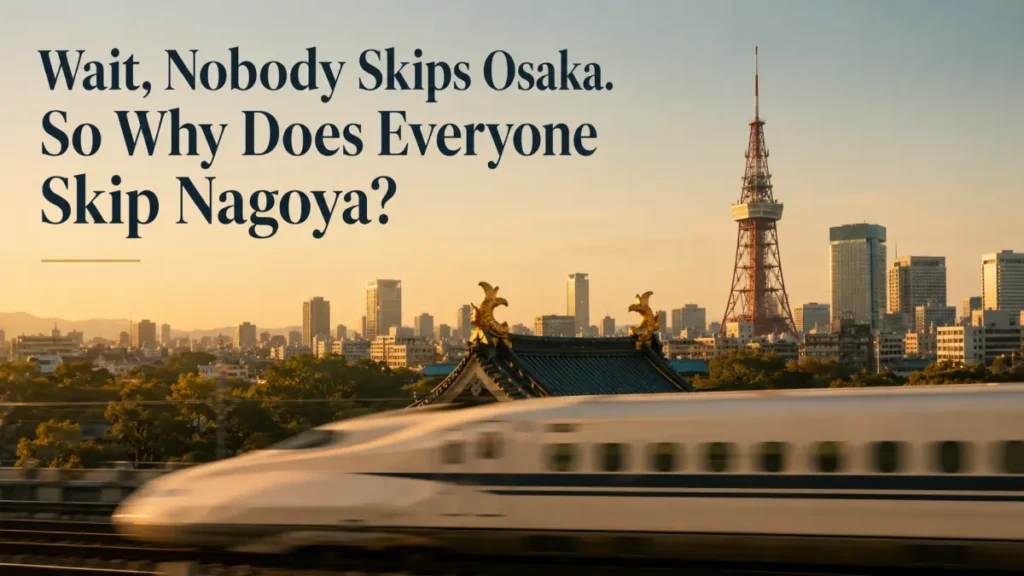
Notice who calls Nagoya boring. Not only outsiders — the people who live there. That’s the part I find telling.
In my experience, a place that undersells itself this consistently usually isn’t empty; it just isn’t in the business of performing for you.
Nagoya doesn’t greet you with a skyline of postcards. It keeps its best parts one layer down and waits to see whether you’ll look.
So the way to enjoy Nagoya isn’t to arrive expecting to be dazzled. It’s to go and find things — the counter with no English menu, the district the tour buses skip — and to extend the people the same patience.
First impressions here run reserved. Stay a beat longer and the shell tends to crack into something unusually warm.
The city that swears there’s nothing here is, quietly, betting you won’t take it at its word. Prove it wrong. Start with the one reason that pulled you off the train — Ghibli Park, or a bowl of something red-miso and unrepentant — and let the rest of the city surprise you from there.
[Related article → /nagoya-ben-phrases/ coming soon]
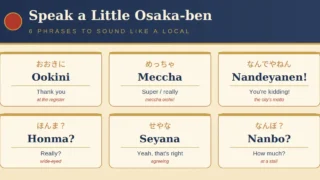
【Related article】A Traveler’s Guide to Osaka-ben — Speak a Little Like a Local